Saturday, August 30, 2008

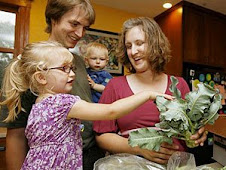
Our Little Trooper (photo)

Neva is SO amazing!
She generally understands what we're doing and what it means for her (and she somewhat understands why we're doing it). I regularly overhear her narrating her play and she'll ask a pretend vendor, "Is it local?" or play-act making her own food. She also asks questions of me about what is and isn't local on a regular basis and when I answer that something is not, she moves on to the next thing.

Well, today we spent a few hours at the Rock River Thresheree and Steam Show in Edgerton, WI (thanks for our friends Joe and Jeff who recommended it!). While there, Neva saw many people walking around with lemonade - definitely off of our list! She has been pretending to make and serve lemonade quite a bit lately as one of the storybook characters she likes sets up a lemonade stand and she pretends to do the same.

When we walked by one of the lemonade booths she asks (very politely) if she may have some lemonade. Kevin and I give each other the same "gee, we really would like to say 'yes' but we don't want to buy citrus AND sugar so what should we do?" look. Kevin tells her that he will let her make the decision but she should know that lemonade is not local. He asked her if she would like some and she said, "no." My heart soared as I thought, "wow, she's really willing to 'take one for the team'." We both affirmed her decision as we moved along. As we walked away I noticed that her head was hung low, really low, and she was silently crying as she walked with us.

I stopped and knelt down to talk to her and asked her why she was feeling sad. She said that she really wanted to try lemonade but it wasn't local so she wouldn't have any. I just gave her a big hug and told her how proud of her I was for her to make that decision and to be willing to go along with our experiment like that. I told her that she was awesome and I loved her and that I wanted to reward her for being so wonderful and not making a fuss and sticking to it. And then I told her that I would reward her by buying her a lemonade... gasp!

She looked at me incredulously, as if she couldn't believe what I was telling her. This was no ploy on her part to get what she wanted, she was truly sad but willing to forgo the treat. I was really serious though and we went and waited in line and she got a "small" lemonade (at least it was real lemonade and not the powered stuff) and was so, so happy.


For the most part, she is unaffected by our fun and challenging project. She still gets great food, lots of variety, and a fair amount of desserts and snacks - as long as it all comes from within 100 miles. She helps me make and prepare many things and is excited about what we can produce and especially enjoys our regular visits to area farms. She is rarely phased when I tell her we can't have something or make something we used to because we don't have all of the ingredients available to us. But it just broke my heart to see her being so good but so sad today and I'm glad we gave in to give her a special treat and reward her for being such a good little trooper.

Monday, August 25, 2008

Minding my P's and Q's

Sorry I’ve been away from the computer for a while but I’ve been using all available time to put up food for the winter. Those who know me know that I am a bit of a wordophile, a student of etymology. No, not the study of insects (although that’s cool too!), but the origins, histories, and meanings of words and phrases. As I’ve been working this weekend, I’ve truly been “minding my p's and q's” because the p's and q's refer to pints and quarts and I’ve been using plenty of those (as well as half-pints).

Last Monday I was invited to a friend’s house to pick black chokeberries for making jam. He is also my official gardening mentor so he showed me what to do and we talked gardens and farmers’ markets while picking berries. He had picked a bowl full and made juice then jelly and had some juice left to give me, in addition to the many ripe berries remaining on the shrub. That night I returned and made juice by cooking down the berries with some water and straining the result. I made enough juice (supplementing his) to make a double batch of jelly and still put a quart in the freezer.

Then Tuesday we were invited to another friend’s house to pick crab apples from her amazingly-productive tree. I brought home a stock pot full of little fushia and gold fruits and a few days later, I cooked those down and strained them in my jelly bag, making enough juice for a dozen jars of jelly and another quart of juice in the freezer. I didn’t make this jelly, however, until the weekend when my parents were keeping Neva to play at their house and Kevin was home to entertain Kai. In addition to the jellies, I tried my hand at more savory canned goods. I spent Sunday making a batch and a half of Kosher dill pickles and a batch of tomato and green chile salsa. Both contained mostly vegetables from my good friend, Joe, who met me at the Roscoe farmers' market with a trunk full of extras from his garden.

The pickles promise to be good (we soaked the leftover cucumbers in the remaining juice for an hour or so and ate them for dinner), once they have a month or so to really meld flavors. I used a variety of spices and put dill, a clove of garlic, a bay leaf, and mustard seed in each jar. The salsa also tasted good right out of the pot (and smelled amazing!). It was a lot of work, time-wise, to make the four-and-a-half quarts I produced but I still think I’ll be happy to have it this winter. I would have made more but ran out of tomatoes. I intend to try a different recipe and make some more in the coming weeks. Once thing I did notice is that the heirloom tomatoes peeled much more easily, making it go a little quicker - I will have to see if I can come up with a quantity more of those for the next batch.

I am learning to be more resourceful as we progress so I squeezed and strained the juice from the bowl of tomato skins, cores, and seeds that I had removed for the salsa and that resulted in a little more than a half-quart of tomato juice which I froze for later use (either to drink or, more likely, in chili or another soup). The few ounces that didn’t fit in the container went into ice cube trays to use later in smaller quantities for sauces or to flavor soups. This morning I re-made the black chokeberry jelly as it didn’t set properly (the first time this has happened to me). I think I underestimated the amount of natural pectin in the berries (which must have been slim to none). I made up a batch of pectin yesterday and did a test jar which set quickly so I am encouraged, however, the jars I reprocessed have not yet set. I may end up freezing them and calling it black chokeberry sauce.

I have also started making corn relish, although Kai woke up and wasn’t very patient with me as I was shucking corn. I’ll have to return to that project when he takes his nap. Later today I hope to make some bread and butter pickles as well.


It Has to Get Hot Before Getting Cold... my exploits in freezing vegetables.

The other thing we’ve been doing with our time these last few weeks is freezing vegetables. We’ve got to get ourselves through the winter and early spring so we figure we can’t possibly put too much away. Three weeks ago we purchased a large freezer. In that time, we have managed to fill all but about ¼ of it. I expect it to be completely full within another week.

A few weeks ago I brought home 72 ears of corn and my parents (who were here for the weekend to help with the kids so we could do yard/garden work) helped Kevin and me process it for freezing. It took the four of us three hours (we also processed and froze some carrots I had picked up at the Edgebrook Farmers’ Market) to get it all done. I was so glad to have their help, without those three it would have taken me 12 hours alone (and proven to be a very long night!). I bought the corn from the Murphys, who sell fresh produce from their farm on Meridian Rd. (first farm on left, just north of Latham Rd.).

I have also prepared, blanched, and frozen copious amounts of green (and other) beans, squash, carrots, and other veggies as well as frozen blueberries, black and red raspberries, blackberries, and more. I have additionally done some experimental freezing (what is it with me and experiments?). I chopped and vacuum-sealed some green onions (I expect they’ll be tough but will nicely flavor soups and the like) and fresh herbs. I tried basil two ways… chopped and vacuum-sealed and chopped and frozen in water in ice cube trays. We’ll see which, if either, is the best way to do that in the future. I will, of course, keep potted herbs in several windows throughout the winter (as I did successfully last year).

If you are planning to buy or pick and freeze vegetables, know that most require a quick blanching first. Not to cook them, per se, but to kill off the enzymes that would otherwise break down their flavor and quality as they are stored (even in the freezer).

I have found I have the PERFECT tool for this process… my old pasta pot. I have a large (8 qt) stainless steel stock pot with a pasta insert and lid. I’ve had it for over 10 years but I know the brand still exists in stores (Tramontina). Anyway, using this pot has let me blanch more quickly and efficiently (I’ve tried some other methods for comparison so this is based on results, not just conjecture). I can bring the water to a boil, place the veggies for blanching in the pasta part, dunk and blanch them for the requisite number of minutes, and remove and drain them without pouring off my hot water, thereby allowing me to place the lid to keep in the heat and reuse it several times so as not waste the energy required to heat up a new pot full. Note: I haven’t been letting the used water go to waste down the drain either. After several uses, I take the hot water out the door and pour it over my compost pile. It’s providing moisture (especially good since we’ve had so little rain) as well as heat and nutrients!

Anyway, the pasta pot is the greatest invention (works well for pasta too). The other tool I’ve been relying on is a FoodSaver vacuum sealer. I admit that I’ve always poo-pooed the vacuum sealers in the past. I don’t like to buy and use plastic bags, preferring reusable containers with lids, and the thought of re-sealing my cheese after each use (for example) always struck me as silly. However, I’ve talked to several people who regularly store food in the freezer for a period of time and they swear by the vacuum sealer. So, since I wanted to maintain the high quality of this food for six months or more, I broke down and bought one. The good news is that the plastic bags I cringed to buy are actually reusable. They come on a roll and you make them any length you want. You can make them doubly-long and then wash them after use and have enough bag left to use them over several times. The rolls are pricey but I expect not to have to buy any at all next year. Only time will tell if the food is well-preserved and freezer-burn-free but I’m hopeful.

Talking to Others

Kevin and I were invited to talk about our project at the meeting of the Rockford chapter of the Hollistic Mom’s Network at Just Goods, downtown, last Wednesday night. It was an interesting group of people with some great questions and ideas for us. We enjoyed sharing with them about what we are trying to do and learning about some of the great things they already do.

I think the most important take-away message we had (and continue to hold) is this:
The important thing to realize is that eating locally-produced foods and supporting your local economy is not and all-or-nothing endeavor. Every individual regional food item you purchase is something that makes a difference, no matter how small. Commit to trying to eat one local or even regional item at each meal during the growing season (or at just one meal a day!) and you will reduce your food miles, support a local farmer, and be eating better to boot!

Saturday, August 9, 2008

Our "Experiemental" Garden (photos)

I’ve mentioned before that vegetable gardening is new to us. Happily it is working fairly well. We didn’t plant the garden to feed us all year, we had no illusions that we would be so self-sufficient. We planted it to get our hands dirty, so to speak, and start doing something we thought we would find rewarding and interesting. All along I’ve been calling this my experimental garden because I’ve tried some unconventional methods and am focusing on the methodology and learning from experience as much as on reaping a harvest (although I hope to do that too, of course).

The raised beds continue to be the easiest area of the garden to maintain, with the fewest weeds and highest yields. We have had a steady supply of green beans and cucumbers over the past few weeks as well as beets, lettuces, and chard. I have also harvested a few tomatoes, some broccoli, and zucchini from one of our ground-level patches.

The corn looks like we may not see much of it. It was growing tall, over seven feet, and each stalk had two ears that had exposed their silks and seemed to be getting pollinated by bees and other insects, in fact, I pulled one ear just to look inside and at the end of each string of silk was a plump, ripening kernel (which were still immature, of course and the silks were still attached but it was fascinating to study). A week later I noticed that one of the lower ears had been pulled down, exposing the immature kernels from their sheath of husk. I decided it must have been the work of raccoons. Soon after, I noticed more of the same but the upper ears seemed unaffected. Then last weekend a few stalks fell to some shrub trimming that caused branches to knock them over. I stood a few back up and propped them with tomato cages, a pretty funny sight). On Monday night we had some wind with the storms that came through (not nearly the wind they got in the Chicago area) and full one-fourth of the stalks blew over. I’ve left them to see if anything will come of them but I don’t have great expectations for their survival.

I have also noticed that the blasted Japanese beetles seem to like to feast on the silks. As with the one I opened prematurely, the silks were largely severed but the kernels had been pollinated prior to that so I suspect they would be OK. Still, I’m not relying on this garden to be our sole source of food so I purchased six dozen ears of corn from the Murphys who run Murphy’s Market from their house on Meridian Rd (first house north of Latham on the west side of the street). They have some lovely produce including onions, cucumbers, squash, Italian beans, sweet corn, and (soon) tomatoes. Their stand is set up along their drive and is self-service. A sandwich board at the road lists what they have to sell that day. Their prices are very reasonable and they are a very friendly couple!

The cabbages are growing slowly and showing some signs of cabbage moths (last year I had a few cabbages and we just ate them holey). In the other ground-level bed the popcorn is still only about two feet high (it has had a lot of competition from crab grass which I haven’t fully weeded out yet, perhaps this weekend). The zucchini has started to yield but it also was quite overgrown with weeds. The sugar pumpkins are looking happy, with beautiful big blooms but I haven’t lifted aside the leaves to see if they’ve set much fruit yet. The moon and stars watermelon have set fruit, as have the cantaloupe but the cantaloupe fruit looks suspiciously like watermelon (do they start out like that?). The asparagus and strawberries are not producing, of course, but they are doing their things and developing strong root systems.

In addition to experimenting with gardening, I also experimented with storage techniques over winter. I kept one green cabbage, one bag of beets, and one bag of parsnips in the crisper drawer for over six months – just to see how they would fare.

The cabbage paled as we neared spring but did not rot or otherwise look bad. The outer leaves dried a bit but, when peeled away, bared crisp, moist inner ones. Eventually, the cut end of the cabbage sprouted leaves which were also pale yellow and several inches long. I decided at that point to pull the cabbage out of the fridge and set it out at room temperature to see what would happen. Within two days the sprouts tripled in length and turned green. I kept the cabbage on the counter for the better part of a week as the sprouts grew exponentially and soon started to flower. I admit that I wondered if I could plant these shoots but I observed that they were long and narrow and didn’t seem at all like they could produce the typical closed cabbage head. Kevin was reading Four-Season Harvest at the time and happened upon a page that talked about forcing cabbage roots for their small but tasty leaves over winter… this is apparently what I had done. I then harvested the stalks and leaves and chopped them in to some other greens I was sautéing. They were great – we plan to pull all of our cabbage out this fall with roots intact and store them in the root cellar for forcing over winter – I’ll let you know how that works out.

I was happy to see that the beets and parsnips all made it through their long storage and were fully edible come spring (I waited until we had a steady supply of other fresh foods to best replicate what I thought I would need to do this year). I am pulling the rest of our beets from the garden now as they are quite large, but plan to plant another set (hopefully this weekend) for a late season harvest. Of course I don't have room in my refrigerator to store the quantities of root vegetables we will need but we have identified a crawlspace area below our garage addition to use as a root cellar. I have also been freezing copious amounts of local produce... more on that in another post.

Thursday, July 24, 2008

Desperately Seeking Rolled Oats (photos and video)

Oats have been an important part of our diets for years. We all just love a bowl of thick, uncooked oats with milk or yogurt and nuts or fruit for breakfast, especially Neva. We use oats in our pancakes, our muffins, our breads, and many of our desserts - and that’s just the rolled form, I also grind oats for flour (and of course we cook them in winter for a hot breakfast as well). We knew all along that we would want to find local oats.

Back in March, we were returning by bus from O’Hare when we met another couple and struck up a conversation about our respective trips. Small talk with strangers inevitably leads to the “so where do you live?” and “what do you do?” questions. We learned that they own a farm outside of Paw Paw and grow, among other things, oats and wheat. Although we were still a few months away from beginning our year of eating locally, we were already trying to source the things we knew we would need. So we were excited to learn about the oats.

Then at the end of June, we were going to central Illinois for a wedding and would be driving right past Paw Paw. Of course, Paw Paw is within 100 miles of our home but we wanted to be efficient. So I talked with the farmer, Johnnie, about picking up some oats. I learned that a bushel of oats weighs 32 pounds, and that he charges 50 cents extra to gather them from the top of the grain bin. All-told, we paid $3.50 a bushel for four bushels and also bought some bails of straw to use a garden mulch. Johnnie was friendly and helpful and his kindness was extended further when he insisted on giving us a bouquet of wheat for our table and a bucket of lime to amend the soil in our garden (which I haven’t tested the ph of yet so I don’t know if it needs to be amended for next year!).

Neva enjoyed looking at the freshly-washed combine and walking up to the edge of the wheat and oat fields. I loved standing at the edge of that field of almost-ripe grains and listening to the wind whip it around and watching the waves work their way back and forth across the expanse.

If you watch the video below of the windy wheat field, turn the volume down... the wind makes a terrible racket against the microphone of our little camera.

We brought back our oats and then set about figuring out how to process them. We decided that even if it didn’t work, we were out less than $15 and we could give the oats to someone we know who boards horses. But, if we were successful… we would happily have oats all year!

We had a small hand-operated mill that we could use to grind oats into flour and Kevin’s parents have another one with two metal rollers that would allow us to roll the oats. The first thing we tried was to run the oats through the mill as they were. This created rolled oats with flattened hulls pressed firmly into the groats… not so appetizing. So we needed a method to remove hull from groat. Kevin began researching methods and found that it’s not as easy as removing wheat chaff. Apparently, the process is best done with a spinning stone wheel and the oats dropped from a height or with two stone wheels rotating at a distance from each other. To further complicate matters, oats contain more fat than other grains and so are not shelf stable unless they’ve been heated in a kiln (or steamed in the process of hull removal). If left untreated by heat, the oat groats will turn rancid within four days once the hulls are removed. Here is a link to Wikipedia that describes how it works: http://en.wikipedia.org/wiki/Oat

Then a few weeks ago I met someone at Angelic Organics who was picking up her vegetable share and she told me that she once had oats in hulls and had had some success with soaking the grains overnight and then having her kids agitate them underwater. She said the hulls just floated up to the top of the water. I tried that too, even soaking and agitating in turns for 48 hours and far fewer than 50% of the hulls came off, making this method less-than-successful for me.

Now Kevin is looking into mills in the area to try to learn if any process oats. Some, like Graue Mill in Oakbrook, IL, used to process oats back when you couldn’t buy Bob’s Red Mill or Quaker off the shelf but don’t seem to do so anymore. Incidentally, Graue Mill does still grind corn and they make the freshest, finest (in coarse or fine grind) corn meal I’ve ever tasted. I haven’t talked with them yet to determine if the corn they use is local but I intend to do so. I grew up in the Chicago suburbs and fondly remember a class field trip to the mill when I was in the fifth grade… my mom has been buying their corn meal ever since.

Back to the oats… we’re still seeking a good way to process them as we look forlornly upon the four large bags in the corner of our kitchen. We haven’t given up yet but I guess we can always do what our friend did when she came to visit last weekend, she just snacked on the grains, hulls and all, and spit out the hull like a sunflower kernel hull. It’s just not the same.

Wednesday, July 23, 2008

Wine Update

I learned from one of the farmers at Tomorrow's Harvest CSA that there is a winery in Woodstock that produces wine from estate-grown grapes! It is called Saluté! Farm (which also has a CSA for those of you in that area). I haven't tasted the wine yet but I placed their link in the web links column. The wine they sell is from their first production year. I will have to save it for a special ocassion, however, as it is a little pricey for an everyday wine (for me, anyway). But I will be sure to try it.

Also, "vi" commented about the previous wine post with some names of regional producers of spirits. Two are outside of our 100-mile radius so won't work for this year and the third is closer but I have yet to contact them to learn about the sources of their raw grains and such... I suspect therein will lie the problem. Here are the names/URLs for each though, so you can check them out!

Death's Door Spirits (Washington Island, WI)
They source their grain and ingredients right on the island from small-scale farmers. Their website does state that they buy things they can't get on the island "as locally as possible." They produce gin and vodka.
http://www.deathsdoorspirits.com/

Templeton Rye (Templeton, IA)
Originally created and distributed during Prohibition (or so their marketing claims), they make whisky from high-quality rye.
http://www.templetonrye.com/

North Shore Distillery (Lake Bluff, IL)
Small batch spirits including gins, vodkas, and specialty "artisan collections" including absinthe and aquivit. I doubt the ingredients are local (with flavors like mango and vanilla) but it looks like some interesting stuff!
http://www.northshoredistillery.com/

There is just such cool stuff in our region!

Giddy Satisfaction (photos and video)

I finally had a chance to return to my work in the garden Tuesday morning. I actually hired a babysitter in order to have a few uninterrupted hours – we don’t hire babysitters to go out, only to get work done! Hmmm. Anyway, the raised beds are looking quite good, very few weeds, happy and healthy plants. However, the ground-level beds are a mess, growing a fine crop of crab grass along with our vegetables. Still, I spent most of my time on the raised beds which have not had our attention for weeks.

The cucumbers must truly like the amount of rain and humidity we’ve had over the past weeks because they have all grown together and are slowly infringing upon the space of the other plants in that section of the garden. I think I need to nickname the cucumber Audrey II. Not that it’s craving blood but it’s definitely growing fast and taking over; it’s even trying to fill the walkway between two raised beds!

I had to be a bit brutal with it, first tying up what I could to the tripods I had placed for this purpose when I seeded, and then trimming off a large section that had no good place to go (good compost, right?!). I swear that when I looked at the cucumber vines last week I saw only a few very immature fruits. Well, yesterday I harvested ELEVEN good-sized cukes! I didn’t even realize they were there until I started to sort out the vines that were escaping the side of the bed and realized they were hanging below that mess. My analogy comparing myself to the kid watching seeds sprout for the first time continues as I squealed with laughter when I realized my new bounty.

We have given a few cucumbers away, to the family of the babysitter and some friends of ours, but we’ve already eaten six or seven ourselves. Neva polished off one by herself while we were making dinner! Does anyone know a good way to preserve cucumbers (besides pickling)?

When I loosed the twisty cucumber runners from the top of the bush bean supports I also found that I had more than a quart of green beans awaiting picking. Yummy! We eat green beans raw as a snack around here so I sampled as I was working and then Neva dove in when I brought the basket into the house. The cucumbers and green beans were SO GOOD! Each sweet and flavorful in their own way and so crisp and juicy – I don’t know that I’ve ever had them so fresh from the plant.

I moved a few bell pepper plants that were being encroached upon by the beans (since they were being encroached upon by the cucumbers) and did a little weeding in the beds (less than a dozen weeds in each). I harvested a few more beets (I’ve been taking a few each week) and then moved on to the tomato bed.

Ahh, the tomato bed… a scary situation. When I planted the seedlings I planted them quite close together. I had read about a method for producing tomatoes where they are grown more like a vine than a bushy plant. So I had intended to construct a frame and string the tomatoes up, trained as vines. My first design for a frame and string system was not going to work, I had planned to string twine between two tripods but I set it up and realized there would not be enough strength to carry the weight of the plants and fruit. Kevin had another idea which utilized some old posts, still set in concrete, that were lying around in the barn (gotta love repurposed stuff!). He planted the concrete bases on either side of the bed and then devised a sturdy wooden frame to mount on top and go the length of the bed. Unfortunately, he has been so busy (and had some technical difficulties with tools) that he just finished this frame on Monday night, many weeks after we had planned to rig something up.

So, when I went out Tuesday morning to string up my tomatoes, the inevitable had happened… they had grown! They look like a solid four-foot by twelve-foot shrub that stands about three-and-a-half feet high. I started to prune and place my strings but felt like I was fighting hopelessly. The main stems are thick and water-filled and, as such, not very flexible and I’m having trouble making out which branches belong to which plant. I think I need to thin the plants and then work to train them as well as I can at this late date. To further frustrate matters, as I was working with them, unripe fruit fell off. I guess I’m back to where I started in my garden in the woods so many years ago… to my green tomato recipes.

I also discovered that the tomato hornworms have already found my tomato bed. I had rather hoped we wouldn’t be seeing them this year, figuring it would take them a while to find the new planting. Not so! They sure are cool looking caterpillars though; I almost hate to kill something so beautiful… almost. Two of them were covered with oblong, white, egg-looking things which I took to be hornworm eggs. I stepped on them even more ferociously. After a brief internet search, I’ve since found that they are actually another insect parasite! They are the eggs of a parasitic wasp which will eventually kill the hornworm. I also learned that I should not have killed those with the eggs… oops. My knowledge grows by leaps and bounds!

I did see evidence of many helpful insects in the garden. The bumblebees were noisily pollinating the cucumbers and tomatoes (didn’t see my honeybees though) and each cabbage was happily inhabited by a helpful spider, presumably gobbling up any white cabbage moths that try to feast on my food.


So, the learning continues, the plants keep growing, and I spent some time feeling the giddy satisfaction of knowing that I am producing something terrifically yummy out of practically nothing.

Monday, July 14, 2008

Garden Progress (photos)

It seems I can't help but be two weeks behind reality with the photos. Here are a few taken June 29th. I keep sharing the raised bed photos for comparisson and progress. As you can see, we harvested all the rest of the radishes that day, although I admit that I waited about a week too long, they were better the week before. We enjoyed both the radish and the greens in various dishes for several weeks! I will have to go out and take a few more recent photos again soon!